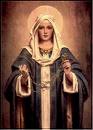
Today we celebrated the Immaculate Conception of our Blessed Mother Mary. I have decided to post this today so that everyone who reads this can understand why this is so critical to us today as it was in 1854. I have reached the point like St Ingatius Loyola before me I will follow the teachings of the Church to the end. Holy Mother Church is the pillar of the truth, discover this for yourself. God Bless, Todd
THE IMMACULATE CONCEPTION
Ineffabilis Deus
Apostolic Constitution issued by Pope Pius IX on December 8, 1854.
God Ineffable -- whose ways are mercy and truth, whose will is omnipotence itself, and whose wisdom "reaches from end to end mightily, and orders all things sweetly" -- having foreseen from all eternity the lamentable wretchedness of the entire human race which would result from the sin of Adam, decreed, by a plan hidden from the centuries, to complete the first work of his goodness by a mystery yet more wondrously sublime through the Incarnation of the Word. This he decreed in order that man who, contrary to the plan of Divine Mercy had been led into sin by the cunning malice of Satan, should not perish; and in order that what had been lost in the first Adam would be gloriously restored in the Second Adam. From the very beginning, and before time began, the eternal Father chose and prepared for his only-begotten Son a Mother in whom the Son of God would become incarnate and from whom, in the blessed fullness of time, he would be born into this world. Above all creatures did God so loved her that truly in her was the Father well pleased with singular delight. Therefore, far above all the angels and all the saints so wondrously did God endow her with the abundance of all heavenly gifts poured from the treasury of his divinity that this mother, ever absolutely free of all stain of sin, all fair and perfect, would possess that fullness of holy innocence and sanctity than which, under God, one cannot even imagine anything greater, and which, outside of God, no mind can succeed in comprehending fully.

Supreme Reason for the Privilege: The Divine Maternity
And indeed it was wholly fitting that so wonderful a mother should be ever resplendent with the glory of most sublime holiness and so completely free from all taint of original sin that she would triumph utterly over the ancient serpent. To her did the Father will to give his only-begotten Son -- the Son whom, equal to the Father and begotten by him, the Father loves from his heart -- and to give this Son in such a way that he would be the one and the same common Son of God the Father and of the Blessed Virgin Mary. It was she whom the Son himself chose to make his Mother and it was from her that the Holy Spirit willed and brought it about that he should be conceived and born from whom he himself proceeds.[1]
Liturgical Argument
The Catholic Church, directed by the Holy Spirit of God, is the pillar and base of truth and has ever held as divinely revealed and as contained in the deposit of heavenly revelation this doctrine concerning the original innocence of the august Virgin -- a doctrine which is so perfectly in harmony with her wonderful sanctity and preeminent dignity as Mother of God -- and thus has never ceased to explain, to teach and to foster this doctrine age after age in many ways and by solemn acts. From this very doctrine, flourishing and wondrously propagated in the Catholic world through the efforts and zeal of the bishops, was made very clear by the Church when she did not hesitate to present for the public devotion and veneration of the faithful the Feast of the Conception of the Blessed Virgin.[2] By this most significant fact, the Church made it clear indeed that the conception of Mary is to be venerated as something extraordinary, wonderful, eminently holy, and different from the conception of all other human beings -- for the Church celebrates only the feast days of the saints.
And hence the very words with which the Sacred Scriptures speak of Uncreated Wisdom and set forth his eternal origin, the Church, both in its ecclesiastical offices and in its liturgy, has been wont to apply likewise to the origin of the Blessed Virgin, inasmuch as God, by one and the same decree, had established the origin of Mary and the Incarnation of Divine Wisdom.
Ordinary Teaching of the Roman Church
These truths, so generally accepted and put into practice by the faithful, indicate how zealously the Roman Church, mother and teacher of all Churches, has continued to teach this doctrine of the Immaculate Conception of the Virgin. Yet the more important actions of the Church deserve to be mentioned in detail. For such dignity and authority belong to the Church that she alone is the center of truth and of Catholic unity. It is the Church in which alone religion has been inviolably preserved and from which all other Churches must receive the tradition of the Faith.[3]
The same Roman Church, therefore, desired nothing more than by the most persuasive means to state, to protect, to promote and to defend the doctrine of the Immaculate Conception. This fact is most clearly shown to the whole world by numerous and significant acts of the Roman Pontiffs, our predecessors. To them, in the person of the Prince of the Apostles, were divinely entrusted by Christ our Lord, the charge and supreme care and the power of feeding the lambs and sheep; in particular, of confirming their brethren, and of ruling and governing the universal Church.
Veneration of the Immaculate
Our predecessors, indeed, by virtue of their apostolic authority, gloried in instituting the Feast of the Conception in the Roman Church. They did so to enhance its importance and dignity by a suitable Office and Mass, whereby the prerogative of the Virgin, her exception from the hereditary taint, was most distinctly affirmed. As to the homage already instituted, they spared no effort to promote and to extend it either by the granting of indulgences, or by allowing cities, provinces and kingdoms to choose as their patroness God's own Mother, under the title of "The Immaculate Conception." Again, our predecessors approved confraternities, congregations and religious communities founded in honor of the Immaculate Conception, monasteries, hospitals, altars, or churches; they praised persons who vowed to uphold with all their ability the doctrine of the Immaculate Conception of the Mother of God. Besides, it afforded the greatest joy to our predecessors to ordain that the Feast of the Conception should be celebrated in every church with the very same honor as the Feast of the Nativity; that it should be celebrated with an octave by the whole Church; that it should be reverently and generally observed as a holy day of obligation; and that a pontifical Capella should be held in our Liberian pontifical basilica on the day dedicated to the conception of the Virgin. Finally, in their desire to impress this doctrine of the Immaculate Conception of the Mother of God upon the hearts of the faithful, and to intensify the people's piety and enthusiasm for the homage and the veneration of the Virgin conceived without the stain of original sin, they delighted to grant, with the greatest pleasure, permission to proclaim the Immaculate Conception of the Virgin in the Litany of Loreto, and in the Preface of the Mass, so that the rule of prayer might thus serve to illustrate the rule of belief. Therefore, we ourselves, following the procedure of our predecessors, have not only approved and accepted what had already been established, but bearing in mind, moreover, the decree of Sixtus IV, [4] have confirmed by our authority a proper Office in honor of the Immaculate Conception, and have with exceeding joy extended its use to the universal Church.[5]
The Roman Doctrine
Now inasmuch as whatever pertains to sacred worship is intimately connected with its object and cannot have either consistency or durability if this object is vague or uncertain, our predecessors, the Roman Pontiffs, therefore, while directing all their efforts toward an increase of the devotion to the conception, made it their aim not only to emphasize the object with the utmost zeal, but also to enunciate the exact doctrine.[6] Definitely and clearly they taught that the feast was held in honor of the conception of the Virgin. They denounced as false and absolutely foreign to the mind of the Church the opinion of those who held and affirmed that it was not the conception of the Virgin but her sanctification that was honored by the Church. They never thought that greater leniency should be extended toward those who, attempting to disprove the doctrine of the Immaculate Conception of the Virgin, devised a distinction between the first and second instance of conception and inferred that the conception which the Church celebrates was not that of the first instance of conception but the second. In fact, they held it was their duty not only to uphold and defend with all their power the Feast of the Conception of the Blessed Virgin but also to assert that the true object of this veneration was her conception considered in its first instant. Hence the words of one of our predecessors, Alexander VII, who authoritatively and decisively declared the mind of the Church: "Concerning the most Blessed Virgin Mary, Mother of God, ancient indeed is that devotion of the faithful based on the belief that her soul, in the first instant of its creation and in the first instant of the soul's infusion into the body, was, by a special grace and privilege of God, in view of the merits of Jesus Christ, her Son and the Redeemer of the human race, preserved free from all stain of original sin. And in this sense have the faithful ever solemnized and celebrated the Feast of the Conception."[7]
Moreover, our predecessors considered it their special solemn duty with all diligence, zeal, and effort to preserve intact the doctrine of the Immaculate Conception of the Mother of God. For, not only have they in no way ever allowed this doctrine to be censured or changed, but they have gone much further and by clear statements repeatedly asserted that the doctrine by which we profess the Immaculate Conception of the Virgin is on its own merits entirely in harmony with the ecclesiastical veneration; that it is ancient and widespread, and of the same nature as that which the Roman Church has undertaken to promote and to protect, and that it is entirely worthy to be used in the Sacred Liturgy and solemn prayers. Not content with this they most strictly prohibited any opinion contrary to this doctrine to be defended in public or private in order that the doctrine of the Immaculate Conception of the Virgin might remain inviolate. By repeated blows they wished to put an end to such an opinion. And lest these oft-repeated and clearest statements seem useless, they added a sanction to them.
Papal Sanctions
All these things our illustrious predecessor, Alexander VII, summed up in these words: "We have in mind the fact that the Holy Roman Church solemnly celebrated the Feast of the Conception of the undefiled and ever-Virgin Mary, and has long ago appointed for this a special and proper Office according to the pious, devout, and laudable instruction which was given by our predecessor, Sixtus IV. Likewise, we were desirous, after the example of our predecessors, to favor this praiseworthy piety, devotion, feast and veneration -- a veneration which is in keeping with the piety unchanged in the Roman Church from the day it was instituted. We also desired to protect this piety and devotion of venerating and extolling the most Blessed Virgin preserved from original sin by the grace of the Holy Spirit. Moreover, we were anxious to preserve the unity of the Spirit in the bond of peace in the flock of Christ by putting down arguments and controversies and by removing scandals. So at the instance and request of the bishops mentioned above, with the chapters of the churches, and of King Philip and his kingdoms, we renew the Constitutions and Decrees issued by the Roman Pontiffs, our predecessors, especially Sixtus IV,[8] Paul V,[9] and Gregory XV,[10] in favor of the doctrine asserting that the soul of the Blessed Virgin, in its creation and infusion into the body, was endowed with the grace of the Holy Spirit and preserved from original sin; and also in favor of the feast and veneration of the conception of the Virgin Mother of God, which, as is manifest, was instituted in keeping with that pious belief. So we command this feast to be observed under the censures and penalties contained in the same Constitutions.
"And therefore, against all and everyone of those who shall continue to construe the said Constitutions and Decrees in a manner apt to frustrate the favor which is thereby given to the said doctrine, and to the feast and relative veneration, or who shall dare to call into question the said sentence, feast and worship, or in any way whatever, directly or indirectly, shall declare themselves opposed to it under any pretext whatsoever, were it but only to the extent of examining the possibilities of effecting the definition, or who shall comment upon and interpret the Sacred Scripture, or the Fathers or Doctors in connection therewith, or finally, for any reason, or on any occasion, shall dare, either in writing or verbally, to speak, preach, treat, dispute or determine upon, or assert whatsoever against the foregoing matters, or who shall adduce any arguments against them, while leaving them unresolved, or who shall disagree therewith in any other conceivable manner, we hereby declare that in addition to the penalties and censures contained in the Constitutions issued by Sixtus IV to which we want them to be subjected and to which we subject them by the present Constitution, we hereby decree that they be deprived of the authority of preaching, reading in public, that is to say teaching and interpreting; and that they be also deprived ipso facto of the power of voting, either actively or passively, in all elections, without the need for any further declaration; and that also, ipso facto, without any further declaration, they shall incur the penalty of perpetual disability from preaching, reading in public, teaching and interpreting, and that it shall not be possible to absolve them from such penalty, or remove it, save through ourselves, or the Roman Pontiffs who shall succeed us.
"We also require that the same shall remain subject to any other penalties which by us, of our own free will -- or by the Roman Pontiffs, our successors (according as they may decree) -- shall be deemed advisable to establish, and by the present Constitution we declare them subject thereto, and hereby renew the above Decrees and Constitutions of Paul V and Gregory XV.
"Moreover, as regards those books in which the said sentence, feast and relative veneration are called into question or are contradicted in any way whatsoever, according to what has already been stated, either in writing or verbally, in discourses, sermons, lectures, treatises and debates -- that may have been printed after the above-praised Decree of Paul V, or may be printed hereafter we hereby prohibit them, subject to the penalties and censures established by the Index of prohibited books, and ipso facto, without any further declaration, we desire and command that they be held as expressly prohibited."[11]
Testimonies of the Catholic World
All are aware with how much diligence this doctrine of the Immaculate Conception of the Mother of God has been handed down, proposed and defended by the most outstanding religious orders, by the more celebrated theological academies, and by very eminent doctors in the sciences of theology. All know, likewise, how eager the bishops have been to profess openly and publicly, even in ecclesiastical assemblies, that Mary, the most holy Mother of God, by virtue of the foreseen merits of Christ, our Lord and Redeemer, was never subject to original sin, but was completely preserved from the original taint, and hence she was redeemed in a manner more sublime.
The Council of Trent
Besides, we must note a fact of the greatest importance indeed. Even the Council of Trent itself, when it promulgated the dogmatic decree concerning original sin, following the testimonies of the Sacred Scriptures, of the Holy Fathers and of the renowned Council, decreed and defined that all men are born infected by original sin; nevertheless, it solemnly declared that it had no intention of including the blessed and immaculate Virgin Mary, the Mother of God, in this decree and in the general extension of its definition. Indeed, considering the times and circumstances, the Fathers of Trent sufficiently intimated by this declaration that the Blessed Virgin Mary was free from the original stain; and thus they clearly signified that nothing could be reasonably cited from the Sacred Scriptures, from Tradition, or from the authority of the Fathers, which would in any way be opposed to so great a prerogative of the Blessed Virgin.[12]
Testimonies of Tradition
And indeed, illustrious documents of venerable antiquity, of both the Eastern and the Western Church, very forcibly testify that this doctrine of the Immaculate Conception of the most Blessed Virgin, which was daily more and more splendidly explained, stated and confirmed by the highest authority, teaching, zeal, knowledge, and wisdom of the Church, and which was disseminated among all peoples and nations of the Catholic world in a marvelous manner -- this doctrine always existed in the Church as a doctrine that has been received from our ancestors, and that has been stamped with the character of revealed doctrine. For the Church of Christ, watchful guardian that she is, and defender of the dogmas deposited with her, never changes anything, never diminishes anything, never adds anything to them; but with all diligence she treats the ancient documents faithfully and wisely; if they really are of ancient origin and if the faith of the Fathers has transmitted them, she strives to investigate and explain them in such a way that the ancient dogmas of heavenly doctrine will be made evident and clear, but will retain their full, integral, and proper nature, and will grown only within their own genus -- that is, within the same dogma, in the same sense and the same meaning.
Interpreters of the Sacred Scripture
The Fathers and writers of the Church, well versed in the heavenly Scriptures, had nothing more at heart than to vie with one another in preaching and teaching in many wonderful ways the Virgin's supreme sanctity, dignity, and immunity from all stain of sin, and her renowned victory over the most foul enemy of the human race. This they did in the books they wrote to explain the Scriptures, to vindicate the dogmas, and to instruct the faithful. These ecclesiastical writers in quoting the words by which at the beginning of the world God announced his merciful remedies prepared for the regeneration of mankind -- words by which he crushed the audacity of the deceitful serpent and wondrously raised up the hope of our race, saying, "I will put enmities between you and the woman, between your seed and her seed"[13] -- taught that by this divine prophecy the merciful Redeemer of mankind, Jesus Christ, the only begotten Son of God, was clearly foretold: That his most Blessed Mother, the Virgin Mary, was prophetically indicated; and, at the same time, the very enmity of both against the evil one was significantly expressed. Hence, just as Christ, the Mediator between God and man, assumed human nature, blotted the handwriting of the decree that stood against us, and fastened it triumphantly to the cross, so the most holy Virgin, united with him by a most intimate and indissoluble bond, was, with him and through him, eternally at enmity with the evil serpent, and most completely triumphed over him, and thus crushed his head with her immaculate foot.[14]
This sublime and singular privilege of the Blessed Virgin, together with her most excellent innocence, purity, holiness and freedom from every stain of sin, as well as the unspeakable abundance and greatness of all heavenly graces, virtues and privileges -- these the Fathers beheld in that ark of Noah, which was built by divine command and escaped entirely safe and sound from the common shipwreck of the whole world;[15] in the ladder which Jacob saw reaching from the earth to heaven, by whose rungs the angels of God ascended and descended, and on whose top the Lord himself leaned'[16] in that bush which Moses saw in the holy place burning on all sides, which was not consumed or injured in any way but grew green and blossomed beautifully;[17] in that impregnable tower before the enemy, from which hung a thousand bucklers and all the armor of the strong;[18] in that garden enclosed on all sides, which cannot be violated or corrupted by any deceitful plots;[19] as in that resplendent city of God, which has its foundations on the holy mountains;[20] in that most august temple of God, which, radiant with divine splendors, is full of the glory of God;[21] and in very many other biblical types of this kind. In such allusions the Fathers taught that the exalted dignity of the Mother of God, her spotless innocence and her sanctity unstained by any fault, had been prophesied in a wonderful manner.
In like manner did they use the words of the prophets to describe this wondrous abundance of divine gifts and the original innocence of the Virgin of whom Jesus was born. They celebrated the august Virgin as the spotless dove, as the holy Jerusalem, as the exalted throne of God, as the ark and house of holiness which Eternal Wisdom built, and as that Queen who, abounding in delights and leaning on her Beloved, came forth from the mouth of the Most High, entirely perfect, beautiful, most dear to God and never stained with the least blemish.
The Annunciation
When the Fathers and writers of the Church meditated on the fact that the most Blessed Virgin was, in the name and by order of God himself, proclaimed full of grace[22] by the Angel Gabriel when he announced her most sublime dignity of Mother of God, they thought that this singular and solemn salutation, never heard before, showed that the Mother of God is the seat of all divine graces and is adorned with all gifts of the Holy Spirit. To them Mary is an almost infinite treasury, an inexhaustible abyss of these gifts, to such an extent that she was never subject to the curse and was, together with her Son, the only partaker of perpetual benediction. Hence she was worthy to hear Elizabeth, inspired by the Holy Spirit, exclaim: "Blessed are you among women, and blessed is the fruit of your womb."[23]
Mary Compared with Eve
Hence, it is the clear and unanimous opinion of the Fathers that the most glorious Virgin, for whom "he who is mighty has done great things," was resplendent with such an abundance of heavenly gifts, with such a fullness of grace and with such innocence, that she is an unspeakable miracle of God -- indeed, the crown of all miracles and truly the Mother of God; that she approaches as near to God himself as is possible for a created being; and that she is above all men and angels in glory. Hence, to demonstrate the original innocence and sanctity of the Mother of God, not only did they frequently compare her to Eve while yet a virgin, while yet innocence, while yet incorrupt, while not yet deceived by the deadly snares of the most treacherous serpent; but they have also exalted her above Eve with a wonderful variety of expressions. Eve listened to the serpent with lamentable consequences; she fell from original innocence and became his slave. The most Blessed Virgin, on the contrary, ever increased her original gift, and not only never lent an ear to the serpent, but by divinely given power she utterly destroyed the force and dominion of the evil one.
Biblical Figures
Accordingly, the Fathers have never ceased to call the Mother of God the lily among thorns, the land entirely intact, the Virgin undefiled, immaculate, ever blessed, and free from all contagion of sin, she from whom was formed the new Adam, the flawless, brightest, and most beautiful paradise of innocence, immortality and delights planted by God himself and protected against all the snares of the poisonous serpent, the incorruptible wood that the worm of sin had never corrupted, the fountain ever clear and sealed with the power of the Holy Spirit, the most holy temple, the treasure of immortality, the one and only daughter of life -- not of death -- the plant not of anger but of grace, through the singular providence of God growing ever green contrary to the common law, coming as it does from a corrupted and tainted root.
Explicit Affirmation . . .
As if these splendid eulogies and tributes were not sufficient, the Fathers proclaimed with particular and definite statements that when one treats of sin, the holy Virgin Mary is not even to be mentioned; for to her more grace was given than was necessary to conquer sin completely.[24] They also declared that the most glorious Virgin was Reparatrix of the first parents, the giver of life to posterity; that she was chosen before the ages, prepared for himself by the Most High, foretold by God when he said to the serpent, "I will put enmities between you and the woman."[25]-unmistakable evidence that she was crushed the poisonous head of the serpent. And hence they affirmed that the Blessed Virgin was, through grace, entirely free from every stain of sin, and from all corruption of body, soul and mind; that she was always united with God and joined to him by an eternal covenant; that she was never in darkness but always in light; and that, therefore, she was entirely a fit habitation for Christ, not because of the state of her body, but because of her original grace.
. . . Of a Super Eminent Sanctity
To these praises they have added very noble words. Speaking of the conception of the Virgin, they testified that nature yielded to grace and, unable to go on, stood trembling. The Virgin Mother of God would not be conceived by Anna before grace would bear its fruits; it was proper that she be conceived as the first-born, by whom "the first-born of every creature" would be conceived. They testified, too, that the flesh of the Virgin, although derived from Adam, did not contract the stains of Adam, and that on this account the most Blessed Virgin was the tabernacle created by God himself and formed by the Holy Spirit, truly a work in royal purple, adorned and woven with gold, which that new Beseleel[26] made. They affirmed that the same Virgin is, and is deservedly, the first and especial work of God, escaping the fiery arrows the the evil one; that she is beautiful by nature and entirely free from all stain; that at her Immaculate Conception she came into the world all radiant like the dawn. For it was certainly not fitting that this vessel of election should be wounded by the common injuries, since she, differing so much from the others, had only nature in common with them, not sin. In fact, it was quite fitting that, as the Only-Begotten has a Father in heaven, whom the Seraphim extol as thrice holy, so he should have a Mother on earth who would never be without the splendor of holiness.
This doctrine so filled the minds and souls of our ancestors in the faith that a singular and truly marvelous style of speech came into vogue among them. They have frequently addressed the Mother of God as immaculate, as immaculate in every respect; innocent, and verily most innocent; spotless, and entirely spotless; holy and removed from every stain of sin; all pure, all stainless, the very model of purity and innocence; more beautiful than beauty, more lovely than loveliness; more holy than holiness, singularly holy and most pure in soul and body; the one who surpassed all integrity and virginity; the only one who has become the dwelling place of all the graces of the most Holy Spirit. God alone excepted, Mary is more excellent than all, and by nature fair and beautiful, and more holy than the Cherubim and Seraphim. To praise her all the tongues of heaven and earth do not suffice.
Everyone is cognizant that this style of speech has passed almost spontaneously into the books of the most holy liturgy and the Offices of the Church, in which they occur so often and abundantly. In them, the Mother of God is invoked and praised as the one spotless and most beautiful dove, as a rose ever blooming, as perfectly pure, ever immaculate, and ever blessed. She is celebrated as innocence never sullied and as the second Eve who brought forth the Emmanuel.
Preparation for the Definition
No wonder, then, that the Pastors of the Church and the faithful gloried daily more and more in professing with so much piety, religion, and love this doctrine of the Immaculate Conception of the Virgin Mother of God, which, as the Fathers discerned, was recorded in the Divine Scriptures; which was handed down in so many of their most important writings; which was expressed and celebrated in so many illustrious monuments of venerable antiquity; which was proposed and confirmed by the official and authoritative teaching of the Church. Hence, nothing was dearer, nothing more pleasing to these pastors than to venerate, invoke, and proclaim with most ardent affection the Virgin Mother of God conceived without original stain. Accordingly, from ancient times the bishops of the Church, ecclesiastics, religious orders, and even emperors and kings, have earnestly petitioned this Apostolic See to define a dogma of the Catholic Faith the Immaculate Conception of the most holy Mother of God. These petitions were renewed in these our own times; they were especially brought to the attention of Gregory XVI, our predecessor of happy memory, and to ourselves, not only by bishops, but by the secular clergy and religious orders, by sovereign rulers and by the faithful.
Mindful, indeed, of all these things and considering them most attentively with particular joy in our heart, as soon as we, by the inscrutable design of Providence, had been raised to the sublime Chair of St. Peter -- in spite of our unworthiness -- and had begun to govern the universal Church, nothing have we had more at heart -- a heart which from our tenderest years has overflowed with devoted veneration and love for the most Blessed Virgin -- than to show forth her prerogatives in resplendent light.
That we might proceed with great prudence, we established a special congregation of our venerable brethren, the cardinals of the holy Roman Church, illustrious for their piety, wisdom, and knowledge of the sacred scriptures. We also selected priests, both secular and regular, well trained in the theological sciences, that they should most carefully consider all matters pertaining to the Immaculate Conception of the Virgin and make known to us their opinion.
The Mind of the Bishops
Although we knew the mind of the bishops from the petitions which we had received from them, namely, that the Immaculate Conception of the Blessed Virgin be finally defined, nevertheless, on February 2, 1849,[27] we sent an Encyclical Letter from Gaeta to all our venerable brethren, the bishops of the Catholic world, that they should offer prayers to God and then tell us in writing what the piety an devotion of their faithful was in regard to the Immaculate Conception of the Mother of God. We likewise inquired what the bishops themselves thought about defining this doctrine and what their wishes were in regard to making known with all possible solemnity our supreme judgment.
We were certainly filled with the greatest consolation when the replies of our venerable brethren came to us. For, replying to us with a most enthusiastic joy, exultation and zeal, they not only again confirmed their own singular piety toward the Immaculate Conception of the most Blessed Virgin, and that of the secular and religious clergy and of the faithful, but with one voice they even entreated us to define our supreme judgment and authority the Immaculate Conception of the Virgin. In the meantime we were indeed filled with no less joy when, after a diligent examination, our venerable brethren, the cardinals of the special congregation and the theologians chosen by us as counselors (whom we mentioned above), asked with the same enthusiasm and fervor for the definition of the Immaculate Conception of the Mother of God.
Consequently, following the examples of our predecessors, and desiring to proceed in the traditional manner, we announced and held a consistory, in which we addressed our brethren, the cardinals of the Holy Roman Church. It was the greatest spiritual joy for us when we heard them ask us to promulgate the dogmatic definition of the Immaculate Conception of the Virgin Mother of God.[28]
Therefore, having full trust in the Lord that the opportune time had come for defining the Immaculate Conception of the Blessed Virgin Mary, Mother of God, which Holy Scripture, venerable Tradition, the constant mind of the Church, the desire of Catholic bishops and the faithful, and the memorable Acts and Constitutions of our predecessors, wonderfully illustrate and proclaim, and having most diligently considered all things, as we poured forth to God ceaseless and fervent prayers, we concluded that we should no longer delay in decreeing and defining by our supreme authority the Immaculate Conception of the Blessed Virgin. And thus, we can satisfy the most holy desire of the Catholic world as well as our own devotion toward the most holy Virgin, and at the same time honor more and more the only begotten Son, Jesus Christ our Lord through his holy Mother -- since whatever honor and praise are bestowed on the Mother redound to the Son.
The Definition
Wherefore, in humility and fasting, we unceasingly offered our private prayers as well as the public prayers of the Church to God the Father through his Son, that he would deign to direct and strengthen our mind by the power of the Holy Spirit. In like manner did we implore the help of the entire heavenly host as we ardently invoked the Paraclete. Accordingly, by the inspiration of the Holy Spirit, for the honor of the Holy and undivided Trinity, for the glory and adornment of the Virgin Mother of God, for the exaltation of the Catholic Faith, and for the furtherance of the Catholic religion, by the authority of Jesus Christ our Lord, of the Blessed Apostles Peter and Paul, and by our own: "We declare, pronounce, and define that the doctrine which holds that the most Blessed Virgin Mary, in the first instance of her conception, by a singular grace and privilege granted by Almighty God, in view of the merits of Jesus Christ, the Savior of the human race, was preserved free from all stain of original sin, is a doctrine revealed by God and therefore to be believed firmly and constantly by all the faithful."[29]
Hence, if anyone shall dare -- which God forbid! -- to think otherwise than as has been defined by us, let him know and understand that he is condemned by his own judgment; that he has suffered shipwreck in the faith; that he has separated from the unity of the Church; and that, furthermore, by his own action he incurs the penalties established by law if he should are to express in words or writing or by any other outward means the errors he think in his heart.
Hoped-For Results
Our soul overflows with joy and our tongue with exultation. We give, and we shall continue to give, the humblest and deepest thanks to Jesus Christ, our Lord, because through his singular grace he has granted to us, unworthy though we be, to decree and offer this honor and glory and praise to his most holy Mother. All our hope do we repose in the most Blessed Virgin -- in the all fair and immaculate one who has crushed the poisonous head of the most cruel serpent and brought salvation to the world: in her who is the glory of the prophets and apostles, the honor of the martyrs, the crown and joy of all the saints; in her who is the safest refuge and the most trustworthy helper of all who are in danger; in her who, with her only-begotten Son, is the most powerful Mediatrix and Conciliatrix in the whole world; in her who is the most excellent glory, ornament, and impregnable stronghold of the holy Church; in her who has destroyed all heresies and snatched the faithful people and nations from all kinds of direst calamities; in her do we hope who has delivered us from so many threatening dangers. We have, therefore, a very certain hope and complete confidence that the most Blessed Virgin will ensure by her most powerful patronage that all difficulties be removed and all errors dissipated, so that our Holy Mother the Catholic Church may flourish daily more and more throughout all the nations and countries, and may reign "from sea to sea and from the river to the ends of the earth," and may enjoy genuine peace, tranquility and liberty. We are firm in our confidence that she will obtain pardon for the sinner, health for the sick, strength of heart for the weak, consolation for the afflicted, help for those in danger; that she will remove spiritual blindness from all who are in error, so that they may return to the path of truth and justice, and that here may be one flock and one shepherd.
Let all the children of the Catholic Church, who are so very dear to us, hear these words of ours. With a still more ardent zeal for piety, religion and love, let them continue to venerate, invoke and pray to the most Blessed Virgin Mary, Mother of God, conceived without original sin. Let them fly with utter confidence to this most sweet Mother of mercy and grace in all dangers, difficulties, needs, doubts and fears. Under her guidance, under her patronage, under her kindness and protection, nothing is to be feared; nothing is hopeless. Because, while bearing toward us a truly motherly affection and having in her care the work of our salvation, she is solicitous about the whole human race. And since she has been appointed by God to be the Queen of heaven and earth, and is exalted above all the choirs of angels and saints, and even stands at the right hand of her only-begotten Son, Jesus Christ our Lord, she presents our petitions in a most efficacious manner. What she asks, she obtains. Her pleas can never be unheard.
Given at St. Peter's in Rome, the eighth day of December, 1854, in the eighth year of our pontificate.
Pius IX
http://www.papalencyclicals.net/Pius09/p9ineff.htm
Please pray the Holy Rosary of the Blessed Virgin Mary EVERY DAY for the Divine Mercy and Divine Grace of Jesus upon all souls, for peace,the salvation of expecting mothers, the ending of abortion, the salvation of all souls, and for the intentions of the Holy Father Pope Benedict XVII Instructions on how to pray the Rosary- http://www.ewtn.com/devotionals/prayers/rosary/how_to.htm
Please pray the Divine Mercy Chaplet, Daily for the mercy of God upon us,the souls of all sinners, the souls of the dying, the faithful, the Pope, all Bishops, all Priests, all religious, the Holy souls in purgatory, those who do not believe in God and who do not yet know Jesus, all who are suffering and in need. May Jesus have mercy on us all.Instructions on how to pray the Divine Mercy Chaplet-http://www.ewtn.com/devotionals/mercy/dmmap.htm
Please pray the Stations of the Cross daily to remember the Divine Mercy and Grace of Jesus, the sacrifice Jesus made for us and to encourage us to do the same for others. Abortion is a national tragedy and will not end without the intercession of Jesus and Mary. Jesus, we trust in you.Instructions on the Stations of the Cross-http://www.cptryon.org/xpipassio/stations/
Please pray that we help the New Evangelism and reach 3 million who will be devoted to these prayers, with the intercession of Mary and Jesus this can actively change our world for the better!